
How to Buy a Car in Florida Made Easy
How to Buy a Car in Florida
Buying a car in Florida requires a few key steps. Shoppers should first research vehicles and check for recalls. Financing options include traditional loans, leasing, or in-house financing. Buyers from licensed dealers receive stronger legal protections than those in private sales, which lack Lemon Law coverage for used cars.
Shop New, Certified & Pre-Owned Vehicles
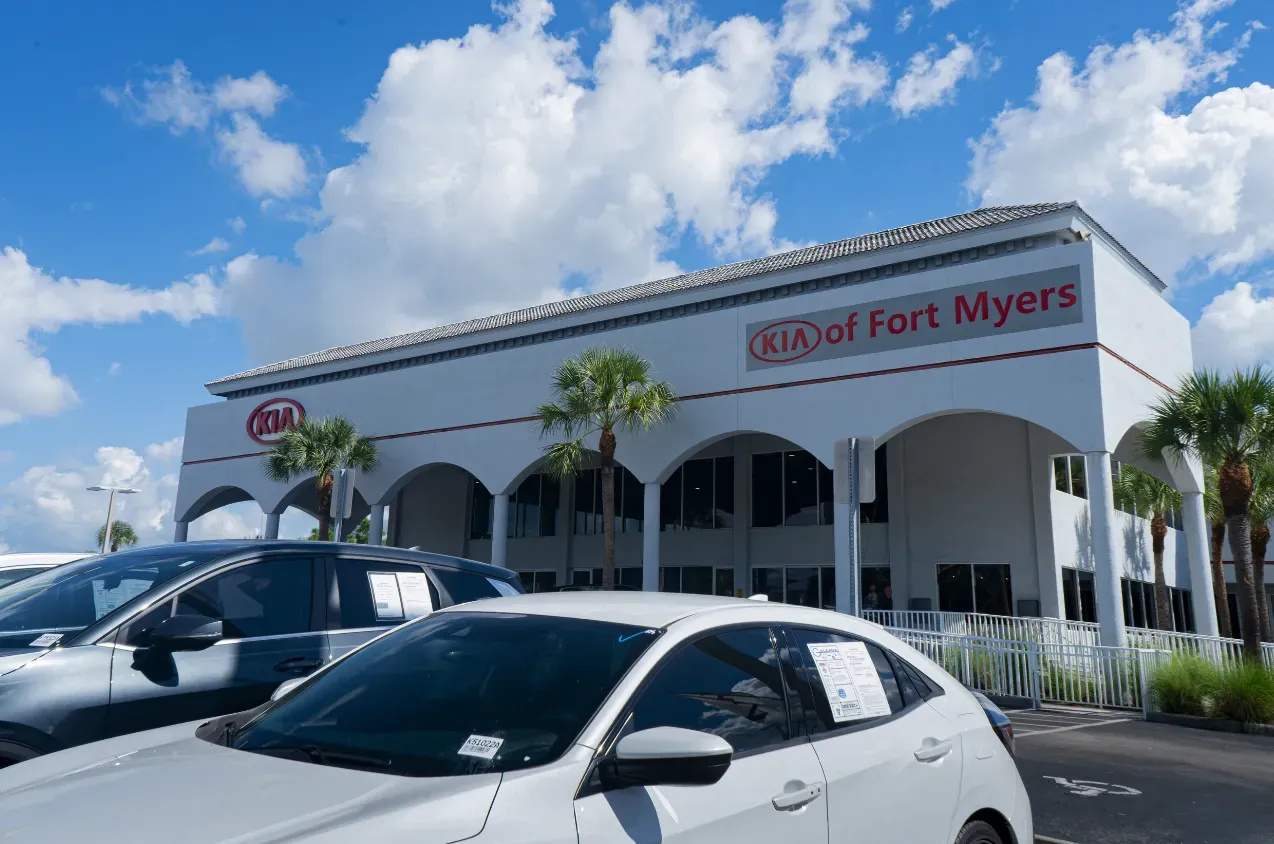
Browse inventory, book service, and apply for financing all in one place at Fort Myers Auto Group — home of CDJR of Fort Myers and Kia of Fort Myers, serving Fort Myers, Cape Coral, North Fort Myers, Lehigh Acres, Estero, and Bonita Springs, FL.
Key Takeaways
- Florida requires proof of auto insurance with PIP and PDL coverage before completing any vehicle purchase.
- A government-issued photo ID serves as acceptable identification, but a valid driver's license is not legally required to buy a car.
- Florida imposes a state sales tax, county surtax, registration fees, and dealer documentation fees that all factor into the total budget.
- Licensed dealers provide Lemon Law coverage for new vehicles and handle titling and DMV compliance, unlike private sellers.
What documents do I need to buy a car in Florida?
Florida vehicle purchases require specific documentation before a deal closes. Missing paperwork delays the process and can cost buyers their chosen vehicle. The Florida Department of Highway Safety and Motor Vehicles (FLHSMV) sets clear requirements that every buyer must meet.
What identification is accepted when buying a car in Florida?
A valid driver's license is not legally required to purchase a vehicle in Florida. A government-issued photo ID serves as acceptable identification for the transaction. The license becomes necessary only when operating the car on public roads. Buyers without a license should confirm dealership-specific policies before visiting.
What insurance coverage must I have before purchasing?
Proof of Florida auto insurance is mandatory before completing any vehicle purchase. The policy must include Personal Injury Protection (PIP) and Property Damage Liability (PDL) coverage. Dealerships verify active insurance before releasing the vehicle. Buyers who arrive without this documentation face immediate delays.
The following documents form a standard purchase checklist:
- Government-issued photo ID for identity verification during the sale and registration process
- Proof of Florida auto insurance with active PIP and PDL coverage meeting state minimums
- Proof of income and residence when applying for financing through a dealership or lender
- Vehicle title and lien release documents if trading in an existing car
Financing applications add another layer of documentation. Lenders and dealerships typically request recent pay stubs, bank statements, or tax returns to verify income. A utility bill or lease agreement confirms the buyer's residential address. Financing solutions are structured to accommodate varied customer circumstances.
Trade-in transactions demand the vehicle's title, free of errors. Any outstanding loan requires a lien release or payoff statement from the lender. Missing lien documents stall the trade-in valuation and the overall deal. Buyers who gather these items beforehand move through the process without interruption.
How do I set a budget for a car purchase in Florida?
Setting a car budget in Florida requires calculating more than the sticker price. A complete budget accounts for state sales tax, county surtax, registration fees, and dealer charges before determining a realistic monthly payment.
How to Buy a Car in Florida starts with understanding the total out-the-door cost. Florida imposes a state sales tax on vehicle purchases. Lee County adds a discretionary surtax that increases the final tax burden. Buyers who overlook this surtax risk a shortfall of several hundred dollars at closing.
Tag, title, and registration fees form another mandatory expense category. The Florida Department of Highway Safety and Motor Vehicles sets these charges based on vehicle type and county of registration. A heavier truck or a vehicle registered in a different Florida county carries different fees than a compact sedan in Lee County. Requesting a fee breakdown early prevents last-minute surprises.
Dealer documentation fees also affect the final figure. Florida regulates these charges, but the amount still varies between dealerships. Reviewing the doc fee as part of the negotiated out-the-door price keeps comparisons accurate across multiple stores.
What costs beyond the car price should Florida buyers include?
A complete Florida car budget has five components. The vehicle sale price is the starting point. State sales tax comes next. The Lee County discretionary surtax follows. Tag, title, and registration fees add another layer. Dealer documentation fees complete the calculation. Skipping any one of these distorts the true cost.
How does financing affect the monthly budget?
Loan structure shapes what a buyer actually pays each month. The down payment reduces the financed principal directly. A longer loan term lowers monthly payments but increases total interest paid over time. Financing solutions accommodate different budget levels and credit profiles. Buyers should compare the monthly payment against their household expenses and leave room for insurance, fuel, and maintenance. A payment that fits comfortably today prevents financial strain across the full loan term.
Should I buy from a dealer or a private seller in Florida?
Buying from a licensed dealer in Florida provides consumer protections that private sales do not offer. A dealer purchase includes Lemon Law coverage for new vehicles, while private party transactions carry no such safeguard. The Florida Department of Highway Safety and Motor Vehicles (FLHSMV) advises buyers to understand the distinct roles and responsibilities of licensed dealers before committing to a purchase.
What protections do licensed dealers offer in Florida?
Licensed dealers handle titling and DMV compliance, which simplifies the registration process for the buyer. The FLHSMV emphasizes that consumers should know their rights when working with a licensed dealer. This administrative support removes paperwork burdens that private sellers leave entirely to the buyer.
Is there a Lemon Law for used cars in Florida?
No. Florida has no Lemon Law for used cars, regardless of where the vehicle is purchased. This makes dealer purchases with warranties a safer choice for pre-owned vehicles. A private seller offers no warranty obligation after the sale closes.
What risks come with private party sales in Florida?
Private party sales expose buyers to odometer fraud and curbstoning. The FLHSMV recommends verifying the odometer reading through its Motor Vehicle Information Check before any private purchase. Licensed dealers eliminate this risk through regulated disclosure requirements.
| Factor | Licensed Dealer | Private Seller |
|---|---|---|
| Lemon Law coverage | Yes, for new vehicles | No |
| Warranty options | Available | Rarely offered |
| Title and DMV handling | Dealer manages | Buyer manages |
| Odometer fraud risk | Low | Higher |
For Florida car shoppers weighing how to buy a car in Florida, the dealer route offers documented protections. Licensed dealer services across Florida include transparent pricing and accessible financing. A streamlined trade-in process further reduces friction for buyers replacing an existing vehicle.
How do I check a used car for flood or hurricane damage in Florida?
Florida buyers face elevated risk from storm-damaged vehicles entering the resale market. A systematic inspection catches hidden water damage before purchase. The Florida Department of Highway Safety and Motor Vehicles (FLHSMV) recommends specific verification steps for private sales.
What does the FLHSMV Motor Vehicle Information Check reveal?
The FLHSMV Motor Vehicle Information Check provides recall data and odometer history. Buyers should research the vehicle before purchasing by checking the vehicle and tires for recalls. This free resource also verifies the odometer reading, which helps avoid odometer fraud, a common issue in used car sales.
How do I inspect a used car for flood or hurricane damage in Florida?
Follow these steps in order:
- Check for mildew odors inside the cabin, especially under floor mats and in the trunk.
- Inspect carpets and upholstery for dampness, staining, or water lines.
- Look under seats and in the spare tire well for mud, silt, or rust.
- Examine electrical components such as dashboard lights and seat controls for corrosion or malfunction.
- Check the engine compartment for rust on bolts, brackets, and wiring connections.
Flood-damaged vehicles often show water stains, musty smells, and corrosion in hidden areas. Rust on metal components under the dashboard and in the trunk are strong indicators of past submersion. Electrical gremlins that appear after the vehicle has dried out also point to flood exposure.
Licensed dealers across Florida offer transparent pricing and accessible financing. A streamlined trade-in process helps customers replacing storm-damaged vehicles.
Can I buy a car in Florida without a driver's license?
Florida law separates vehicle ownership from driving privileges. A driver's license is not required to purchase a car in the state. The transaction hinges on the title, not on the buyer's ability to operate the vehicle on public roads. Buyers without a license face no legal barrier at the point of sale. However, the same individuals must still satisfy registration and insurance mandates to complete legal ownership.
What legal requirements exist for buying a car without a license?
Vehicle ownership in Florida is primarily tied to the title. The state imposes no requirement to present a driver's license when signing a purchase agreement or transferring a title. A buyer can legally own a car without ever holding a driving credential. The critical distinction is that a driver's license is necessary to operate a car on public roads, but not to own one.
What steps must a buyer without a license complete after purchase?
Owning the vehicle legally demands more than a signed bill of sale. The buyer must navigate registration steps and secure insurance coverage. Florida dealerships and the Department of Highway Safety and Motor Vehicles outline clear processes for titling a vehicle to an unlicensed owner. Failure to complete these steps leaves the owner exposed to penalties and registration blocks. The following numbered sequence details the post-purchase requirements:
- Secure an active auto insurance policy. Florida requires proof of insurance before any vehicle registration can be processed, regardless of the owner's license status.
- Complete the title transfer. The seller and buyer must fill out the title certificate accurately, listing the unlicensed individual as the legal owner.
- Register the vehicle with the FLHSMV. The owner submits the title, proof of insurance, and applicable fees to obtain a license plate and registration. A valid driver's license is not a prerequisite for this step.
Can an unlicensed buyer finance a car in Florida?
Financing approval depends on the lender's policies, not state law. Many lenders evaluate credit history and income rather than driving credentials. Many dealerships across Florida offer accessible financing paths that accommodate diverse situations. Transparent pricing and streamlined trade-in processes further simplify acquisition for customers who may not hold a license. A buyer should confirm lender requirements early, as some institutions impose their own license-related stipulations beyond Florida's legal framework.
What financing options are available for car buyers in Florida?
Florida car buyers evaluate financing based on interest rate, term length, and monthly payment. Each option carries distinct cost structures and flexibility levels that affect long-term ownership.
Traditional loans from banks and credit unions provide a lump sum repaid over time with interest. These loans typically carry fixed or variable interest rates. Buyers who prioritize ownership and predictable monthly payments often select this route.
Leasing allows a customer to drive a vehicle for a set period while making monthly payments. At the lease term's end, the lessee either purchases the vehicle or returns it. Leasing suits drivers who prefer lower monthly costs and newer models every few years.
In-house financing through dealerships simplifies the process. The customer secures a loan directly through the dealership, often with more flexible terms than traditional lenders offer. This option benefits buyers with limited credit history or those seeking a single point of contact.
How does in-house financing work at a Florida dealership?
The dealership acts as the lender rather than a third-party bank. The dealership evaluates the buyer's application directly and structures payment terms accordingly. This arrangement often accommodates credit situations that traditional banks decline.
What should buyers compare before choosing a financing option?
Buyers should compare total cost over the loan term, mileage or usage limits for leases, and flexibility if credit or income changes. Ignoring total cost leads to paying more than the vehicle's value. Overlooking mileage limits triggers costly lease-end penalties.
| Financing Type | Key Feature | Best For |
|---|---|---|
| Traditional Loan | Fixed or variable rates | Buyers seeking ownership |
| Leasing | Set term, purchase option | Lower monthly payments |
| In-House Financing | Direct dealership lending | Flexible credit terms |
Many Florida dealerships offer accessible financing across all three paths. Their finance teams review each customer's situation before recommending a structure. This approach prevents buyers from committing to terms that strain monthly budgets.
How do I register a car I just bought in Florida?
Vehicle registration in Florida follows two distinct paths depending on where the purchase occurred. Buyers who purchase from a licensed dealer receive on-site registration handling and temporary tags. Private party buyers must complete the process themselves at a local tax collector's office or FLHSMV location.
The Florida Department of Highway Safety and Motor Vehicles (FLHSMV) oversees all vehicle registration and provides guidance for new buyers. Licensed dealers handle most of the paperwork. They issue temporary plates and submit registration documents directly to the state. This removes the burden from the customer.
Private sales shift responsibility entirely to the buyer. No dealer protections apply. The buyer must visit a county tax collector's office or FLHSMV service center to transfer the title and complete registration. Missing a deadline or document creates delays that prevent legal road use.
What documents do I need to register a car in Florida?
A valid government-issued photo ID is required. The vehicle title signed over by the seller must be presented. Proof of Florida auto insurance with personal injury protection (PIP) and property damage liability (PDL) coverage is mandatory before registration can proceed. Buyers should also bring a completed VIN verification form if the vehicle came from another state.
Can a dealer handle the registration for me?
Licensed dealers typically manage the entire registration process on-site. They collect the necessary fees, submit the paperwork electronically, and provide a temporary tag valid for 30 days. The permanent license plate arrives by mail. This service eliminates trips to government offices and reduces the risk of paperwork errors that stall registration. Buyers simply drive off the lot with legal temporary credentials in place.
What should I check during a test drive in Florida?
A Florida test drive demands attention to heat, humidity, and highway conditions. Buyers should evaluate cooling performance, braking, and electronic systems before signing any paperwork.
How to Buy a Car in Florida starts with a structured evaluation. A systematic approach covers mechanical function, comfort systems, and vehicle history.
What should I check first during a Florida test drive?
- Test the air conditioning at maximum setting. Florida's heat requires a reliable cooling system. Let the vehicle idle with the AC on high for several minutes. Check airflow from every vent and listen for unusual compressor noise.
- Evaluate braking and highway handling. Drive at highway speed and apply the brakes firmly. The vehicle should stop straight without pulling or vibration. Test acceleration on an entrance ramp to confirm adequate power for merging.
- Verify all electronic features. Operate the infotainment screen, backup camera, power windows, and door locks. Check windows for signs of break-ins, such as tool marks and chipped glass.
- Review maintenance logs. Confirm the vehicle's service history matches the odometer reading. Missing records signal potential neglect.
Should buyers get an independent inspection?
Yes. For used vehicles, schedule an independent pre-purchase inspection with a mechanic of the buyer's choosing. A licensed technician identifies hidden issues that a test drive cannot reveal. This step protects against costly repairs after purchase.
Florida dealerships serve buyers with transparent pricing and accessible financing. Many offer a streamlined trade-in process for customers upgrading their current vehicle.
FAQ
What documents do I need to buy a car in Florida?
A government-issued photo ID serves as acceptable identification. Proof of Florida auto insurance with PIP and PDL coverage is mandatory before completing any vehicle purchase.
Do I need a valid driver's license to buy a car in Florida?
No. A valid driver's license is not legally required to buy a car in Florida, though a government-issued photo ID is required.
Conclusion
Buying a car in Florida requires attention to documentation, financing, and vehicle evaluation, but the process becomes manageable with a structured approach. A buyer who secures proper insurance, chooses a financing path that fits their budget, and completes a thorough test drive positions themselves for a successful purchase. The next step is to apply this knowledge at a dealership that offers transparent pricing and handles registration on-site, allowing the buyer to drive away with confidence.
Our Fort Myers Showrooms
Fort Myers, FL 33912
Fort Myers, FL 33912